The upcoming Xiaomi 18 Pro has made its first significant appearance on the Geekbench database, providing a clear look at the hardware architecture powering the brand's next flagship. Identified by the model number M154FF, the device appears to be the Chinese variant, signaling that Xiaomi is entering the final stages of pre-launch internal testing.
Most notably, the listing showcases an unannounced Qualcomm Snapdragon 8 Elite Extreme Gen 6 chipset. The performance data is striking, with the device posting a single-core score of 3,619 and a multi-core score of 11,842. These figures suggest a massive leap in mobile computing capability, supported by an aggressive core configuration that hits a peak clock speed of 5.01GHz.
Unpacking the 5GHz Performance Ceiling
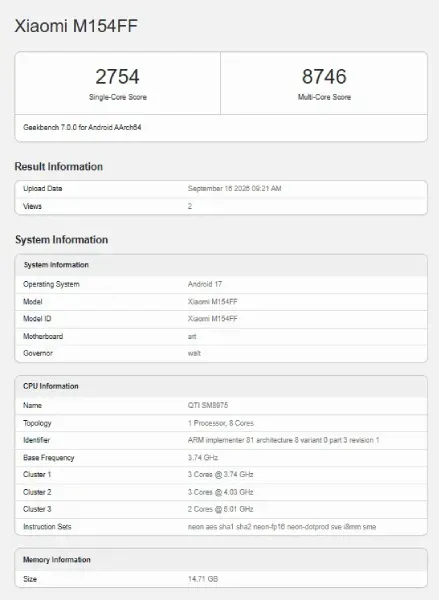
The Geekbench data reveals an intriguing core layout designed for extreme efficiency and brute force. The processor features a unique architecture consisting of three efficiency cores clocked at 3.74GHz, three performance cores at 4.03GHz, and two prime cores that push the limits at 5.01GHz. This high-frequency design implies that the Xiaomi 18 Pro will likely require advanced thermal management solutions to sustain these speeds during demanding tasks like high-fidelity mobile gaming or on-device AI processing.
Beyond the raw silicon, the benchmark confirms that the handset is running on Android 17 layered with Xiaomi’s HyperOS 4. The listing also identifies 14.71GB of RAM, which, in standard consumer marketing terms, will almost certainly be branded as a 16GB RAM configuration. This combination of next-generation software and high-density memory suggests that Xiaomi is aiming to position the 18 Pro as a primary productivity device rather than just a traditional smartphone.
Design Continuity and Future Teasers
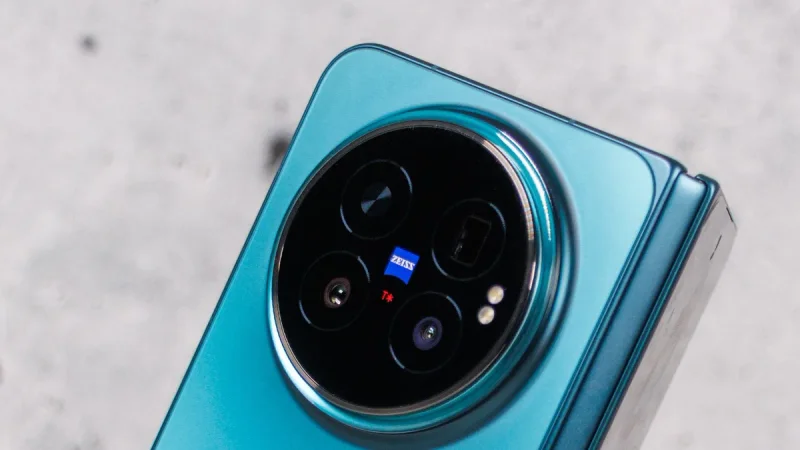
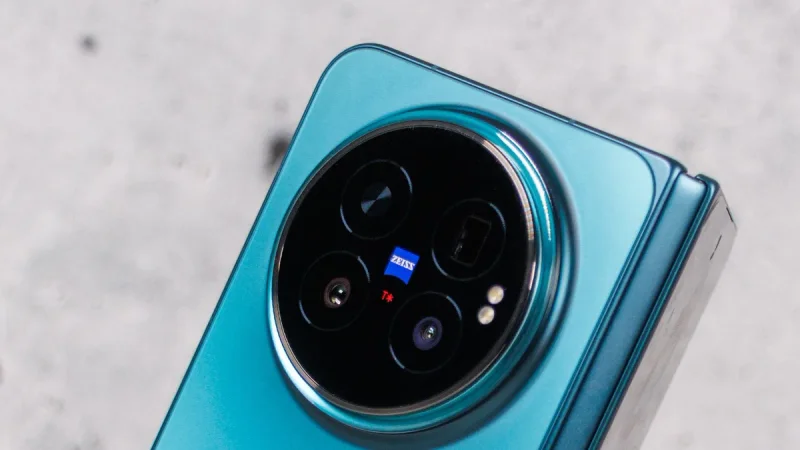
While the internal specifications draw the most attention, the physical design of the 18 Pro remains a focal point for enthusiasts. Xiaomi recently confirmed that the device will retain the rear-facing secondary display that characterized the 17 Pro series. In this iteration, the secondary screen is integrated more fluidly into the rear camera module, housing two lenses directly within the display housing for a more cohesive aesthetic.
As the launch window approaches, Xiaomi has signaled that more information will be released in the coming weeks. While the Geekbench scores provide a compelling glimpse into the hardware, it is important to note that these figures are based on pre-release software and unfinalized silicon. Xiaomi has yet to issue an official statement regarding the specifications, meaning the final retail version could see further optimizations or adjustments before it reaches store shelves.