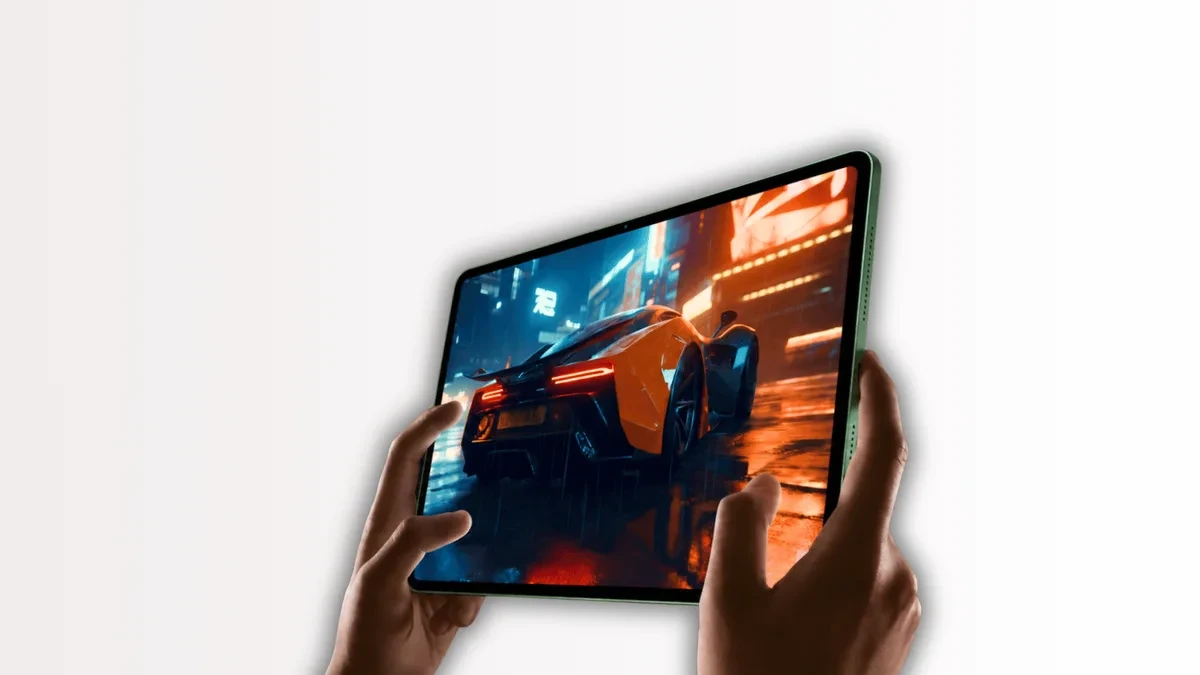
Mobile gamers searching for a truly portable Android tablet with uncompromising flagship silicon might soon have an answer. Early benchmark listings have surfaced for the iQOO Pad Ultra, carrying the model number iPA2691, pointing to a dedicated performance machine built specifically around a compact form factor.
The listing gives us an early look at Qualcomm's next-tier architecture, pairing an unreleased processor with 16GB of RAM and an Adreno 850 GPU. While official pricing details remain unannounced ahead of its anticipated launch window, the hardware configuration positions this device directly against high-end portable gaming hardware.
Early Benchmark Data and Core Architecture
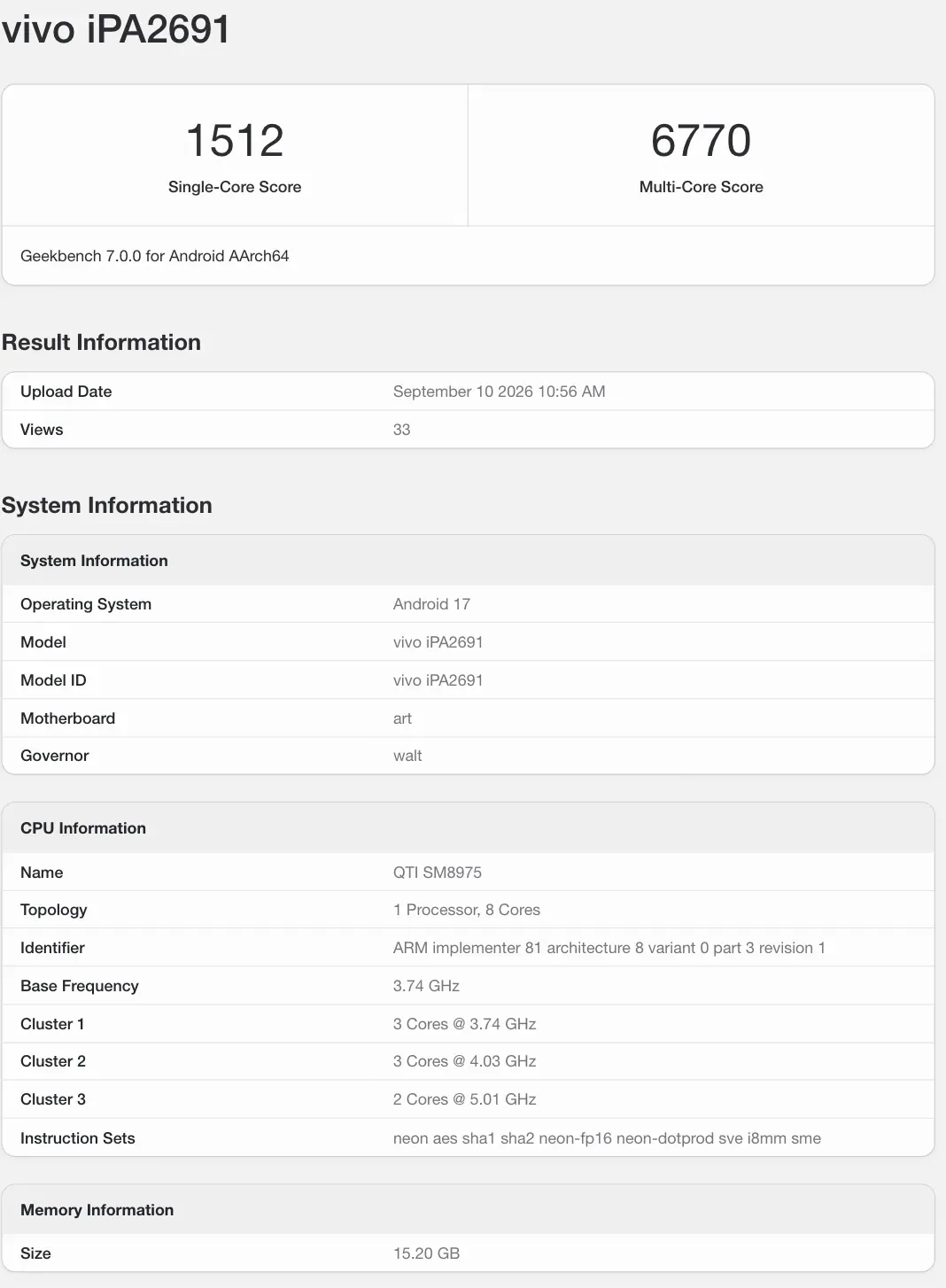
The device model iPA2691 previously surfaced inside China's SRRC certification database, where it was linked directly to the upcoming iQOO Pad Ultra. The fresh Geekbench 7 listing reveals that the tablet runs on an unreleased Qualcomm platform identified by the part number SM8975, anticipated to arrive as the Snapdragon 8 Elite Extreme Gen 6.

Manufactured on a 2nm process node, the chipset utilizes an aggressive eight-core CPU cluster configured across three distinct frequency tiers. The silicon features three efficiency-focused cores running at 3.74 GHz, three mid-tier performance cores clocked at 4.03 GHz, and two peak performance cores pushed all the way to 5.01 GHz. Graphics tasks are handled by Qualcomm's Adreno 850 GPU, backed by a generous 16GB of system memory running on an Android 17 operating system build.
Analyzing Pre-Release Performance and Thermal Limits

In the initial Geekbench 7 run, the tested iQOO Pad Ultra achieved a single-core score of 1,512 points and a multi-core score of 6,770 points. By comparison, Qualcomm's internal reference testing platforms using the identical SM8975 platform have posted scores reaching 3,582 in single-core and 12,247 in multi-core evaluations.
The substantial disparity between the reference figures and this early tablet test highlights typical pre-release conditions. Early engineering firmware often runs conservative CPU governors, unoptimized memory timings, or deliberate thermal throttling caps during initial board bring-up. As software tuning progresses and custom cooling assemblies are finalized, real-world throughput should climb significantly closer to expected target metrics.

Solving the Compact Gaming Dilemma
Most modern Android tablets have expanded into massive 12-inch and 14-inch form factors tailored primarily for split-screen office productivity and stylus drawing. For dedicated mobile gamers, holding these oversized slates during extended multiplayer sessions causes wrist strain and awkward control reach.
By centering the iQOO Pad Ultra around a compact chassis with 16GB of RAM, iQOO targets the sweet spot between smartphone portability and large-screen immersion. High-density RAM ensures heavy titles, background emulators, and discord voice channels run concurrently without aggressive memory killing. If iQOO successfully manages the thermal output of a 5.01 GHz processor inside a smaller shell, the tablet could establish a compelling benchmark for portable gaming hardware.