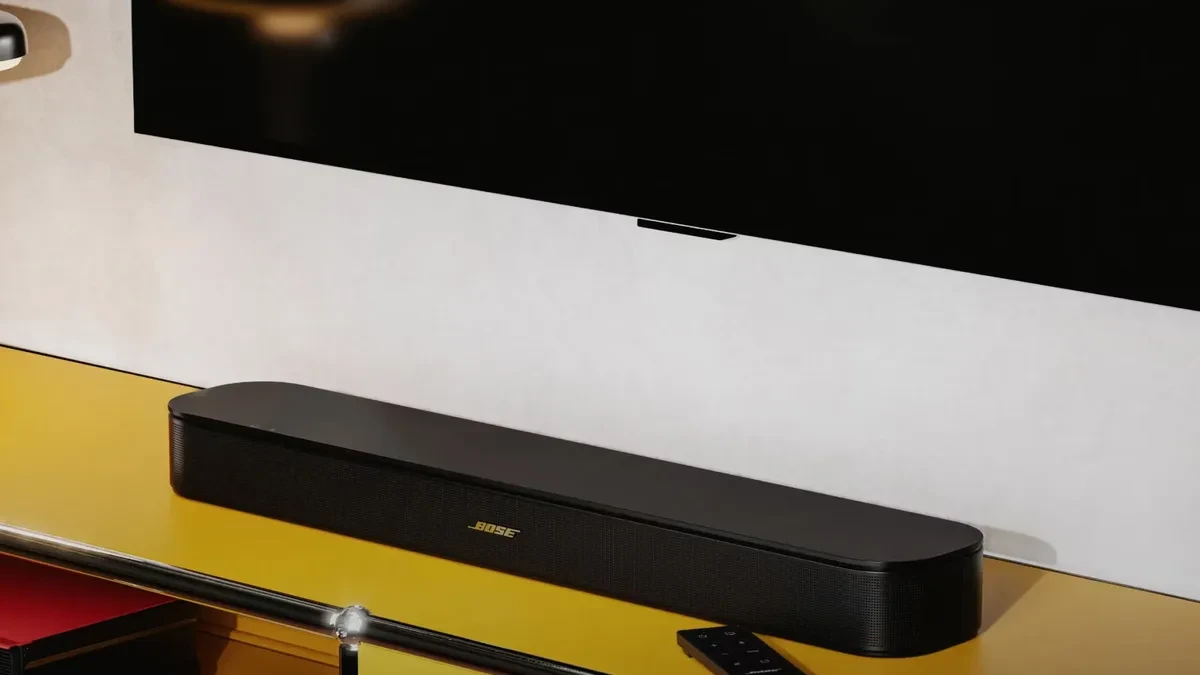
Bose has quietly refreshed its entry-level audio offering with the launch of the TV Speaker 2nd Gen. Designed to address the common struggle of muffled voices in movies and television shows, this updated soundbar introduces a dedicated center-channel tweeter to its architecture. Priced at $299, it represents a modest $20 increase over its predecessor, targeting users who want a compact, straightforward audio upgrade without the complexity of a full surround-sound system.
The most significant internal change is the shift from a two-driver setup to a three-driver array. By adding a dedicated tweeter in the center, Bose aims to isolate vocal frequencies from the rest of the soundstage. This is further supported by a dedicated Dialogue Mode, which uses digital signal processing to pull voices forward in the mix, ensuring that hushed conversations or complex soundscapes do not drown out the script.
Beyond the internal hardware, the design has received a subtle, more modern polish. While the soundbar maintains the same overall footprint as the original, the housing is now rounder, moving away from the sharper, boxy aesthetic of the first-generation model. Despite these changes, the dimensions remain consistent, ensuring that the unit can still fit comfortably under most television stands or wall-mounted displays without obstructing the view.
Connectivity remains functional rather than experimental. The back panel features standard HDMI and optical inputs, alongside a dedicated bass output for those who wish to expand their system. Bose confirms that the unit is compatible with the Bass Module 700 and the Lifestyle Ultra Subwoofer, allowing users to scale their setup if they find the built-in bass performance insufficient for larger rooms. Wireless capabilities are handled via Bluetooth, though Bose has not clarified the specific version or codec support in its initial documentation.
For existing owners of the first-generation Bose TV Speaker, the upgrade path is less clear. While the third driver and refined chassis are welcome improvements, they represent an iterative evolution rather than a fundamental change in functionality. Those currently satisfied with their audio clarity will likely find little reason to replace their existing hardware. However, for buyers looking to improve their TV audio for the first time with a brand-name, compact solution, the 2nd Gen model offers a more focused approach to dialogue-heavy content at a competitive price point.