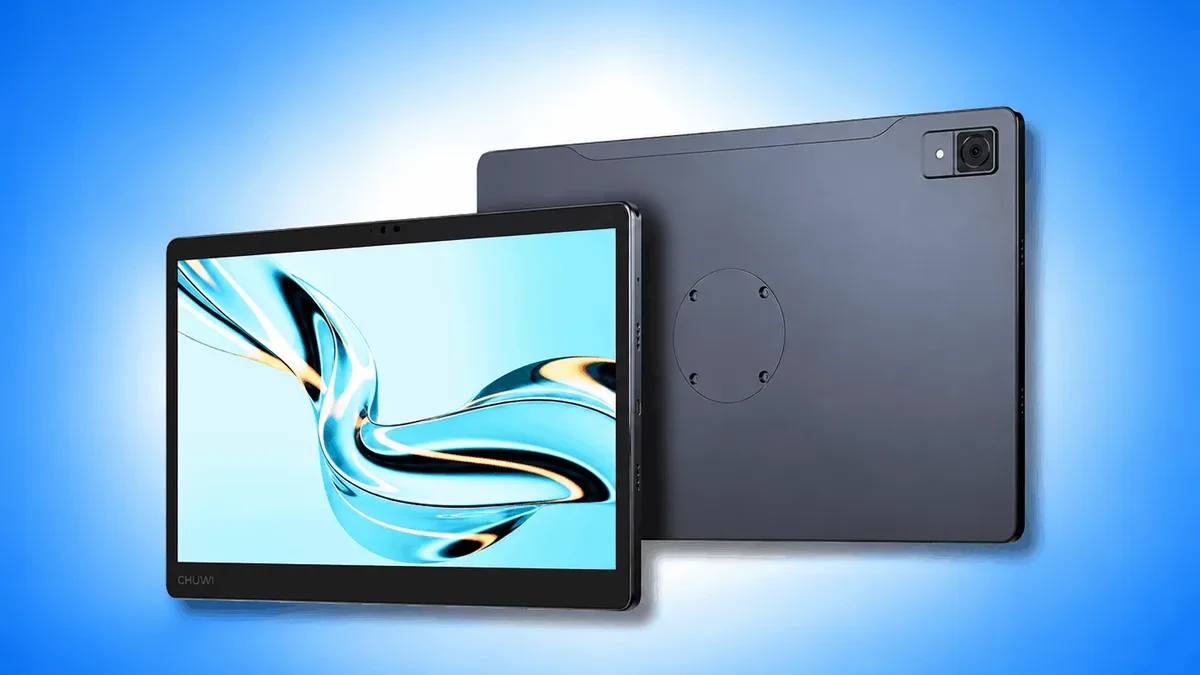
Japanese manufacturer Iris Ohyama has introduced the Luca tablet, an oversized 15.6-inch Android slate priced at approximately $463 (¥71,280). Designed explicitly for household and desktop environments, the device aims to bridge the gap between portable media displays and permanent smart home hubs. By pairing a gigantic display with an integrated magnetic rear connector, the tablet solves the long-standing hassle of managing awkward charging cords and prop stands across living rooms, kitchens, and office desks.
Pre-orders for the Luca tablet (model TM15F1W74-V1H) are already active on the Iris Plaza online platform ahead of its September 24 release in Japan. Unlike conventional tablets that prioritize thinness and hand-held portability above all else, Iris Ohyama prioritizes modular utility, supplying custom magnetic hardware that transforms how users mount, view, and power a broad-canvas screen.
Magnetic Ecosystem Solves Giant Screen Ergonomics
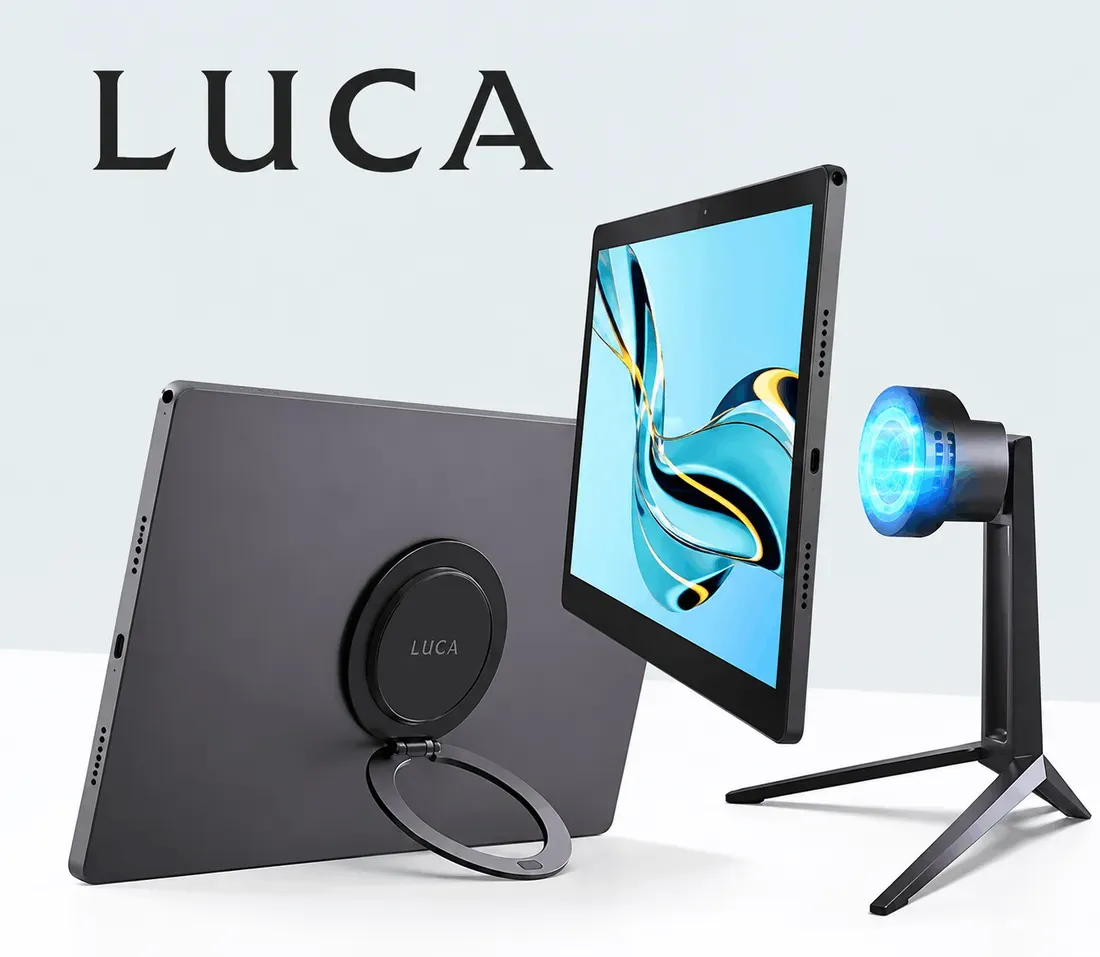
Holding a 15.6-inch screen weighing 1,083 grams (2.39 pounds) during a long cooking session or video call quickly leads to arm fatigue. Iris Ohyama addresses this physical limitation by building a magnetic mounting system directly into the rear panel of the tablet chassis. This system interfaces with two primary accessories sold alongside the main hardware.
The headline accessory is the dedicated Luca wireless charging stand. Rather than forcing users to plug in a USB-C cable every time the screen needs topping up, the stand holds the tablet in place magnetically while supplying up to 15W of wireless power. The stand features an adjustable hinge, allowing users to alter viewing angles effortlessly whether sitting at a desk or standing over a kitchen counter.
For alternative placement, the company developed the Luca tablet ring. This accessory snaps onto the magnetic rear panel to function as an off-center hand grip or a tabletop kickstand. Crucially, the ring design also allows owners to hang the heavy tablet directly from wall hooks or pantry racks, converting the slate into a wall-mounted recipe viewer or dynamic smart dashboard without permanent mounting brackets.
Mid-Range Hardware Geared for Household Utility

To keep the price accessible at around $463, Iris Ohyama made sensible engineering trade-offs regarding interior hardware. The front panel features a 15.6-inch LCD with a Full HD resolution of 1,920 x 1,080 pixels. While pixel density is noticeably lower than ultra-premium displays, the inclusion of Widevine L1 certification ensures native High Definition video playback across popular streaming services like Netflix, Amazon Prime Video, and YouTube.
Under the hood, the slate runs on a Unisoc T620 octa-core processor paired with 4 GB of physical RAM and an optional 4 GB virtual RAM allocation. Storage sits at 128 GB, expandable via a built-in microSD card slot for users who prefer local media collections. For traditional connectivity, the chassis includes a USB-C 2.0 port, Wi-Fi 802.11ac, Bluetooth 5.0, stereo speakers, and a traditional 3.5 mm headphone jack.

Power is provided by an 8,000 mAh internal battery. While 8,000 mAh is somewhat modest for a screen of this scale, the device supports 18W wired fast charging over USB-C alongside its signature 15W magnetic wireless dock option. Front and rear cameras both utilize 8 MP sensors with autofocus, making the device well-suited for basic video calling and document scanning around the home.
Pricing and Market Positioning
The Luca tablet goes on sale in Japan on September 24 for ¥71,280 (roughly $463). Both the magnetic wireless charging stand and the multi-purpose tablet ring will launch simultaneously as separate accessories.
At present, Iris Ohyama has not disclosed international pricing or global distribution plans. However, its unique focus on magnetic mounting and stationary household utility offers an intriguing alternative to traditional high-end slates like Samsung's 14.6-inch Galaxy Tab S10 Ultra or Lenovo's Tab Extreme, proving that sheer screen real estate combined with thoughtful accessories can turn an oversized Android tablet into an effective central household display.