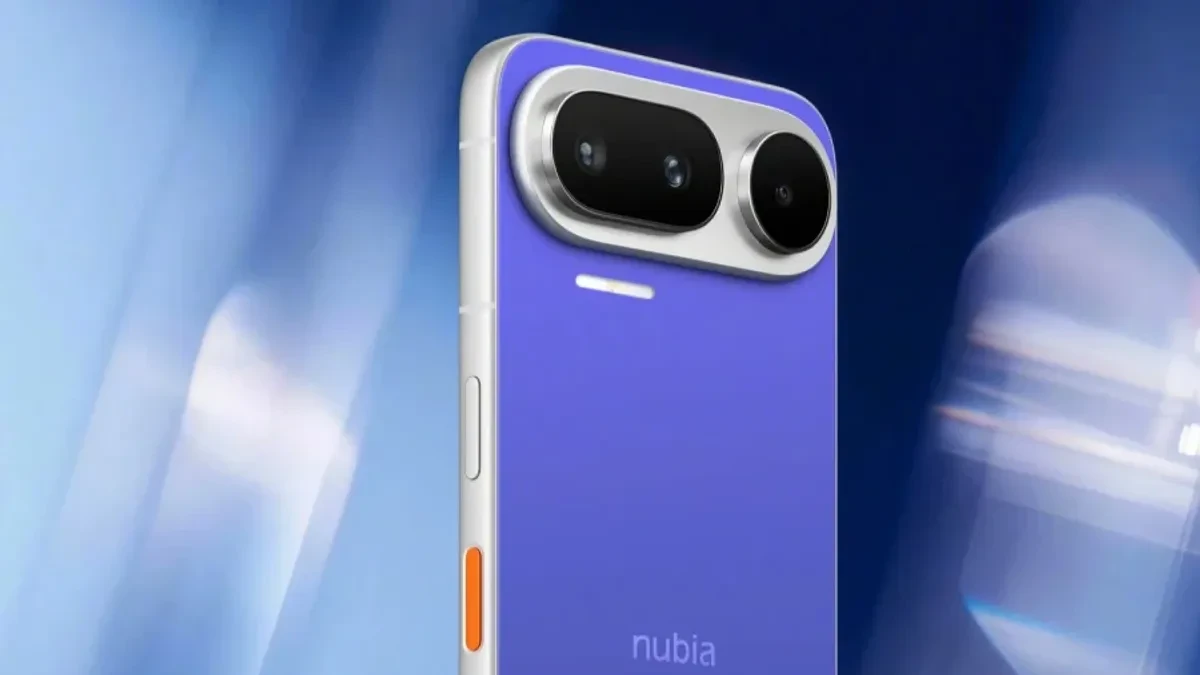
Nubia has officially launched the NaviX Ultra in China, marking its second-generation hardware collaboration with ByteDance. Starting at approximately $840 (5,999 Yuan), the device focuses on deep operating system integration, allowing users to execute complex multi-step tasks across third-party applications using continuous, conversational voice commands rather than manual screen navigation.
The device serves as a direct follow-up to last year's M153, a niche proof-of-concept that sold out quickly in domestic markets before running into functional hurdles when major Chinese software platforms restricted its automated AI assistant permissions. With the NaviX Ultra, Nubia addresses those early software roadblocks while introducing refined privacy controls, expanded system permissions, and upgraded hardware engineered specifically for voice interaction.
A Dual-Purpose AI Key Designed for Real-World Noise
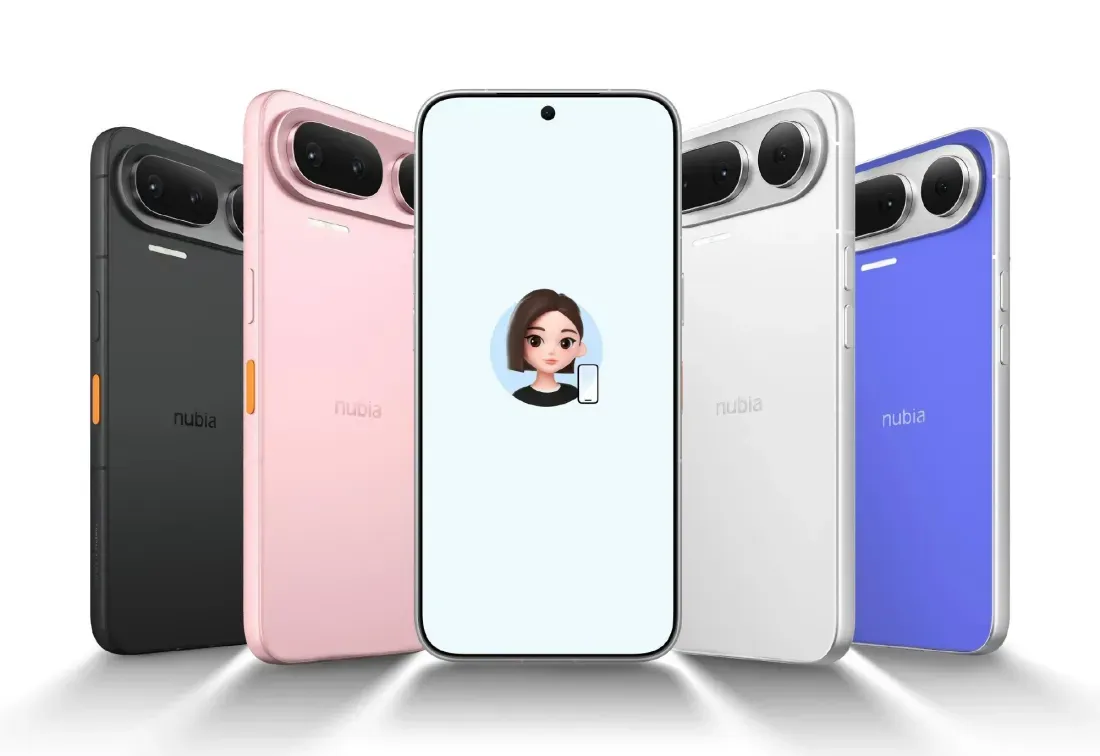
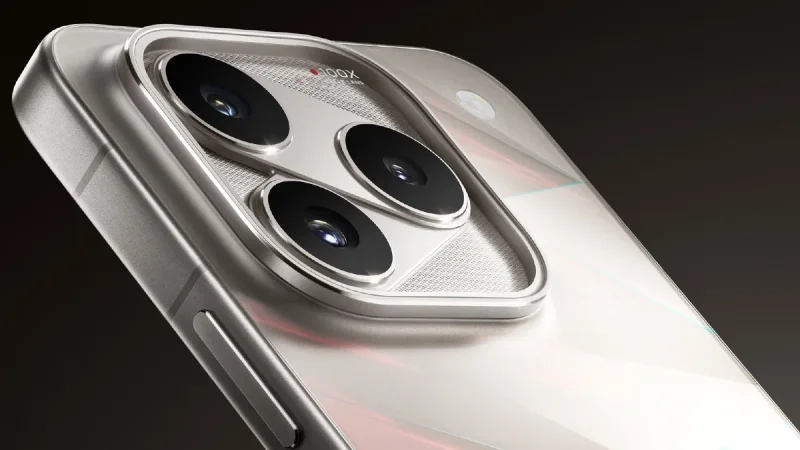
The primary design focal point of the NaviX Ultra is an orange-accented physical button mounted on the side frame. Nubia has integrated a capacitive fingerprint reader directly into this single action key, allowing security authentication and AI activation to occur simultaneously. The button placement has been shifted lower along the chassis compared to conventional power keys to improve single-handed accessibility during quick interactions.
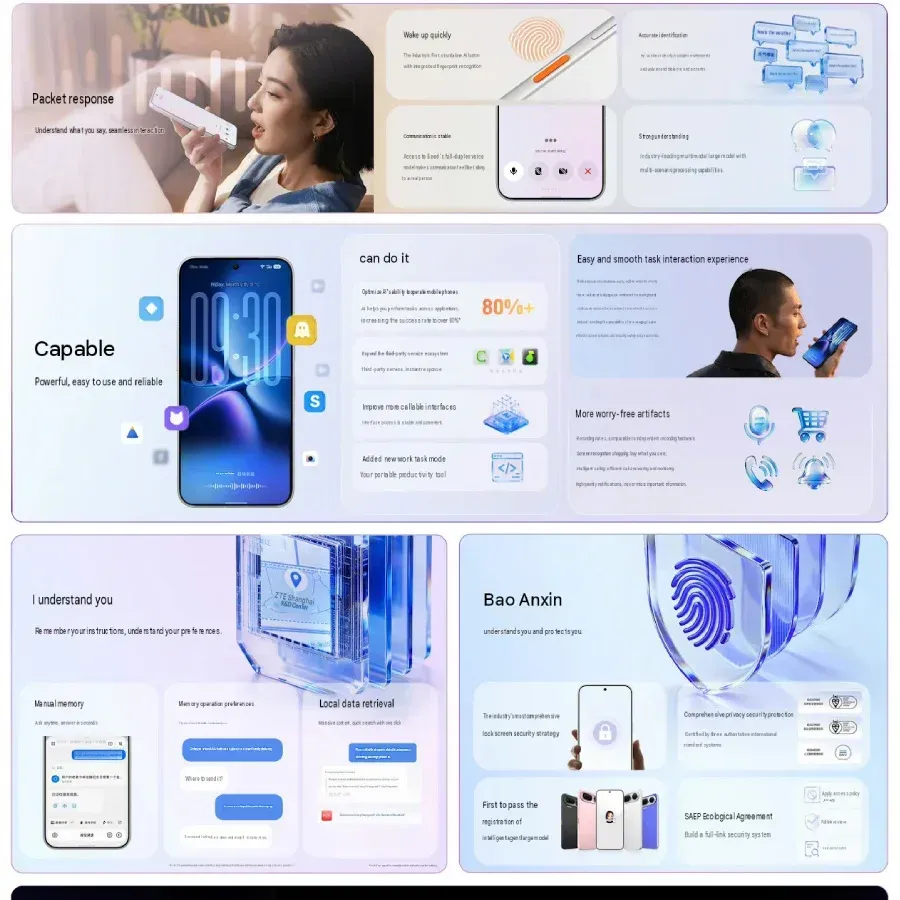
Underneath the hood, the voice interaction pipeline relies on Seed's full-duplex audio architecture. Unlike traditional smartphone assistants that require users to wait for a full response cycle to finish before speaking again, full-duplex processing lets users naturally speak over or interrupt the assistant mid-sentence. Nubia claims the acoustic engineering yields a 48 percent higher wake-up success rate in noisy environments, such as crowded transit hubs, along with a 21 percent improvement in sentence parsing accuracy across more than ten regional dialects, including Cantonese and Minnan.
ByteDance Engine and On-Screen Multimodal Context
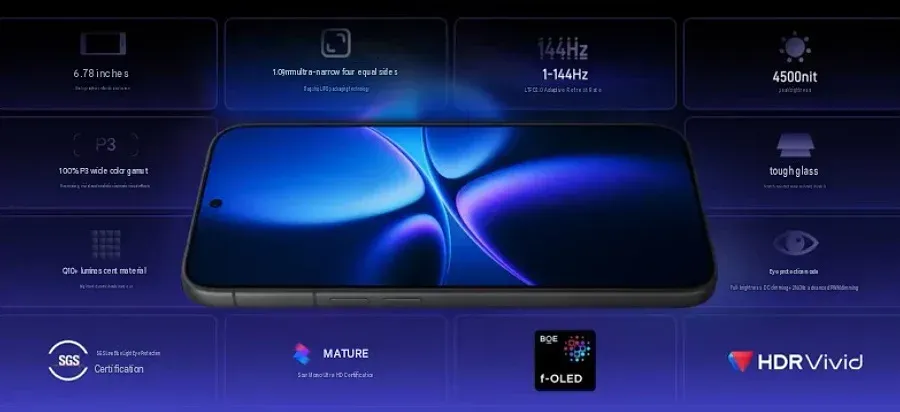
At the software core of the NaviX Ultra is the consumer build of ByteDance's Doubao Mobile Assistant, advancing past the technical preview previewed late last year. The updated system model introduces persistent personal memory, contextual awareness, and real-time screen analysis. Users can prompt the assistant to evaluate image assets on display, parse unstructured text messages, or automatically complete multi-step actions across independent shopping, travel, and messaging applications.
To prevent the service disruptions that plagued its predecessor when competing platforms limited agent automation, Nubia has overhauled its privacy architecture and permission handling. Users retain granular control over what information the assistant reads, including explicit toggles for active screen monitoring and automated input simulation.
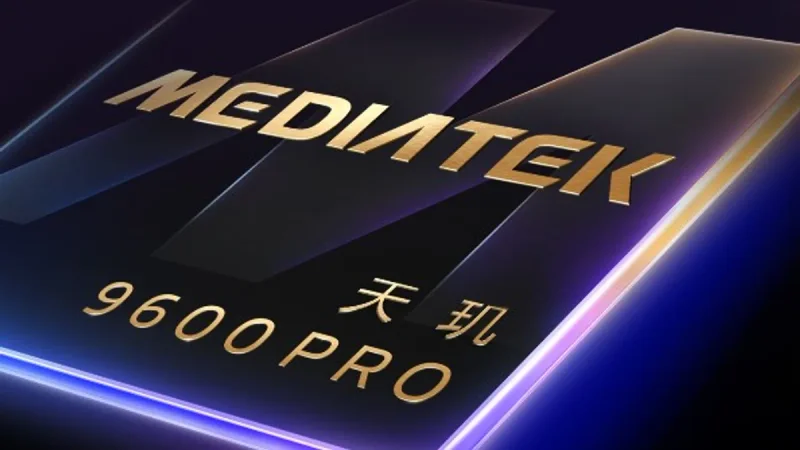
Configuration Options and Market Availability
The Nubia NaviX Ultra is available in three distinct hardware memory configurations within China. The entry model equipped with 12GB of RAM and 512GB of internal storage is priced at $840 (5,999 Yuan). Stepping up to the 16GB RAM variant with 512GB storage brings the price to $910 (6,499 Yuan), while the flagship version packing 16GB of RAM and 1TB of storage retails for $1,050 (7,499 Yuan).
At present, Nubia has not confirmed plans for an international release or global software localization. Given that the Doubao AI ecosystem relies heavily on domestic Chinese app integrations and dialect recognition models, an export version would require significant modifications to partner with Western AI frameworks and app ecosystems before hitting global shelves.