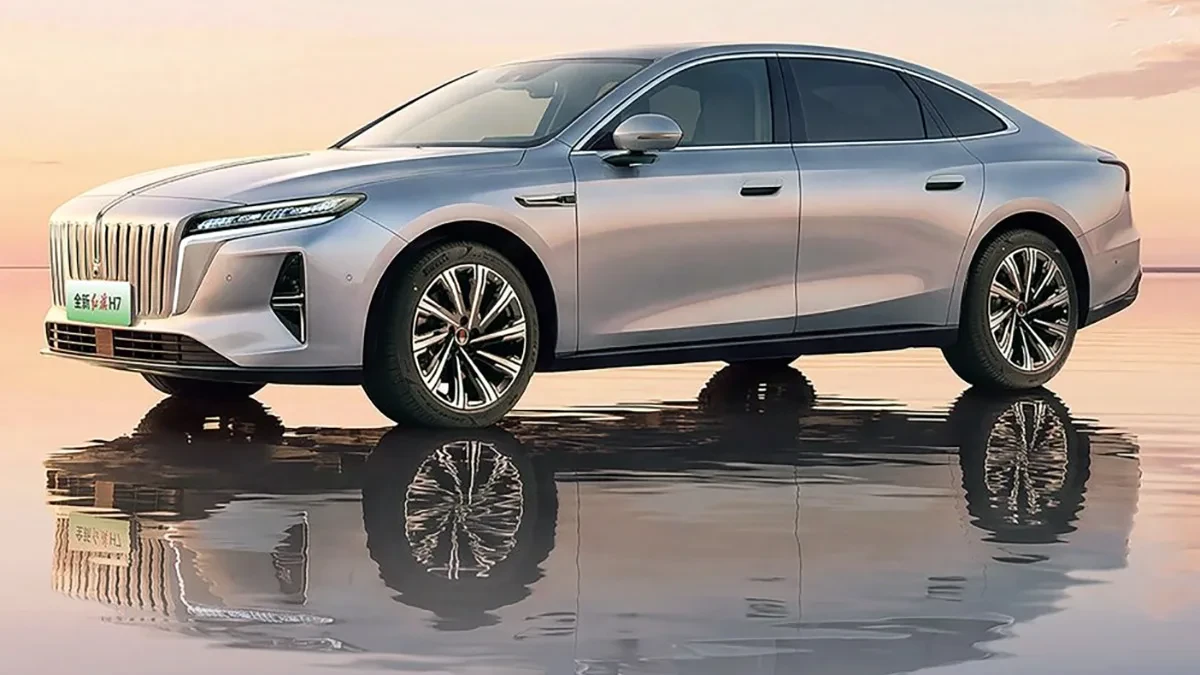
The dream of driving from New York to Florida without stopping for gas or electricity is closer than ever, thanks to a new milestone in automotive engineering. The Hongqi H7, a flagship Extended Range Electric Vehicle (EREV), has officially entered the Guinness World Records after covering a staggering 2,916 km (1,812 miles) on a single combined tank of fuel and a full battery charge.
This feat effectively eclipses the previous record held by the Geely Galaxy A7 EM by more than 300 km. While these figures were achieved under controlled conditions rather than typical highway driving, they underscore the growing dominance of EREV technology in markets where charging infrastructure remains a work in progress. Starting at approximately $27,000 (roughly 195,000 Yuan) in China, the H7 is positioned not just as a record-breaker, but as a practical, high-efficiency alternative to pure battery-electric vehicles.
The Engineering Behind the Range
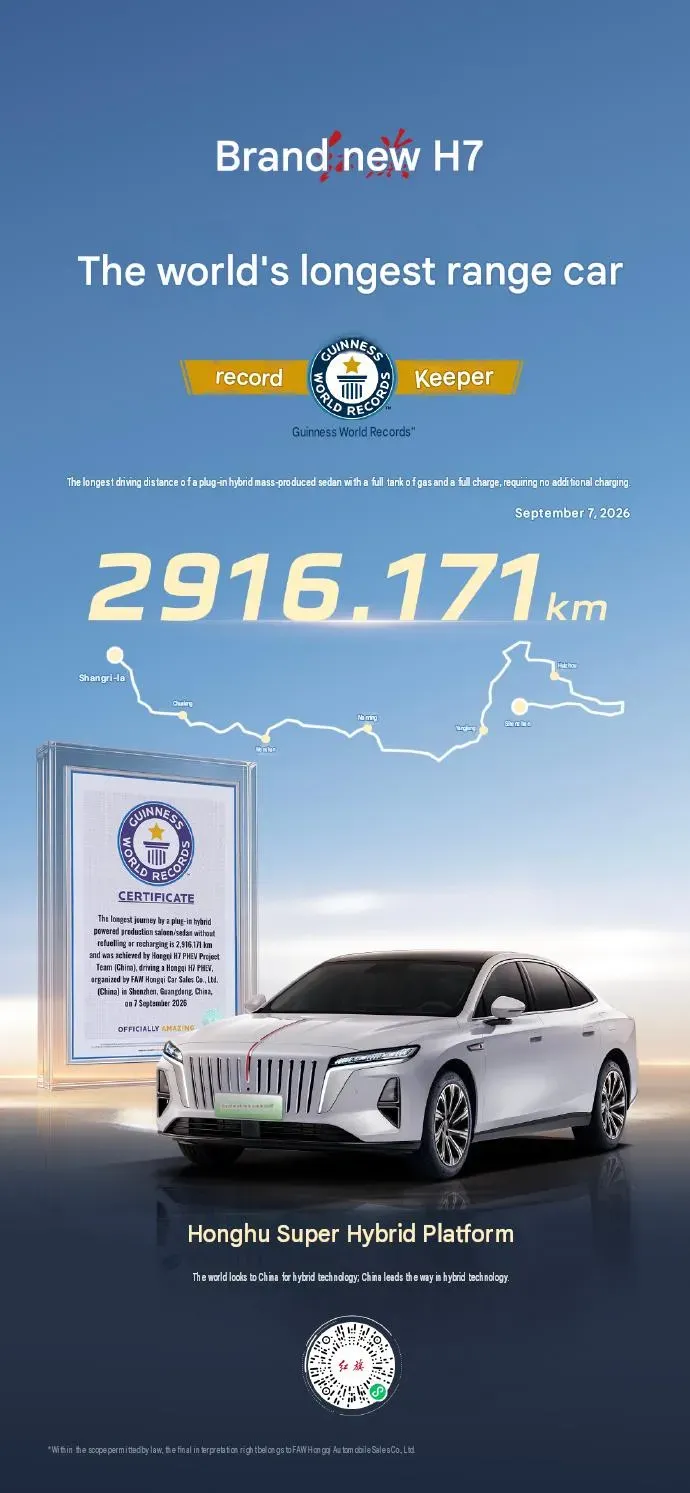
The H7 achieves this endurance by pairing a 1.5-liter turbocharged engine with a robust battery system, available in both ternary lithium and LFP configurations. The vehicle offers 240 km of pure electric range, after which the gasoline engine kicks in to act as a generator for the electric motors. Crucially, this engine boasts a thermal efficiency of 45.21 percent, allowing it to sip fuel at a rate of 4.4 L/100 km once the battery is depleted. Even better, it runs on standard 92-octane gasoline, keeping operating costs significantly lower than high-performance combustion counterparts.
While these numbers are based on the local CLTC testing cycle, which is generally more optimistic than the EPA standards used in the United States, a conservative adjustment still leaves the H7 capable of roughly 1,200 miles of total range. This effectively eliminates the range anxiety that keeps many prospective buyers tethered to gasoline-only vehicles, providing a bridge to the future of high-density battery technology.

Why EREVs Are Winning the Current Market
Hongqi is far from the only manufacturer betting on this hybrid architecture. Major players like Xiaomi and XPeng are pivoting toward EREV technology to satisfy consumers who want the smooth, instant torque of an electric drivetrain without the logistics of a nationwide fast-charging network. XPeng currently holds the record for the longest pure-electric range in an EREV SUV with its G7 model, and rumors suggest Xiaomi is already developing its 'Skynomad' line to push that boundary further with a massive 76 kWh battery.
This trend highlights a clear industry consensus: until solid-state batteries or other energy-dense alternatives reach mass-market affordability, the EREV serves as a highly effective stopgap. By treating the combustion engine as an onboard power plant rather than a direct drive source, manufacturers are squeezing every ounce of utility out of existing infrastructure. Whether you are navigating dense urban environments or planning cross-country road trips, this shift suggests that the era of the 'refueling stop' is becoming significantly less frequent for the average driver.