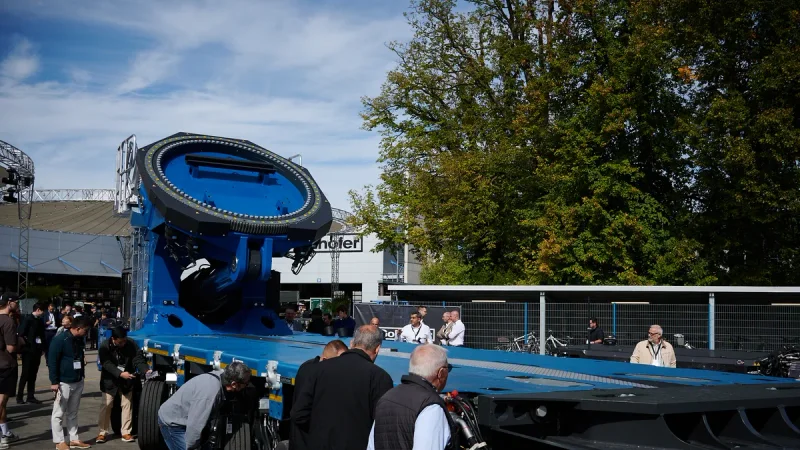
The race to bring pristine Martian soil back to Earth is entering a decisive phase. China is pushing ahead with its Tianwen-3 mission, aiming for a 2028 launch and a historic 2031 return date. If successful, the ambitious effort could make China the first nation in human history to retrieve material directly from the Red Planet - outpacing NASA, whose own flagship Mars Sample Return initiative remains bogged down by budget overruns and timeline uncertainty.
Chief scientist Hou Zengqian recently confirmed to Chinese state media that Tianwen-3 has officially transitioned into its prototyping stage. While engineering team leads acknowledge daunting technical hurdles ahead, the mission schedule remains intact, setting up a high-stakes timeline clash between the world's leading space agencies.
A Two-Rocket Strategy to Unlock Martian Geology
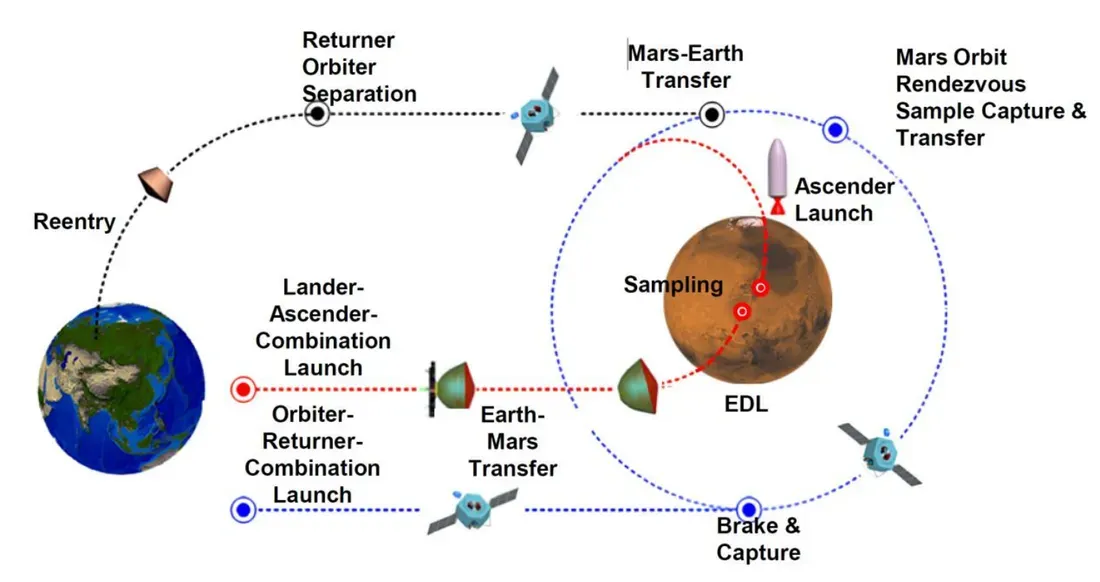
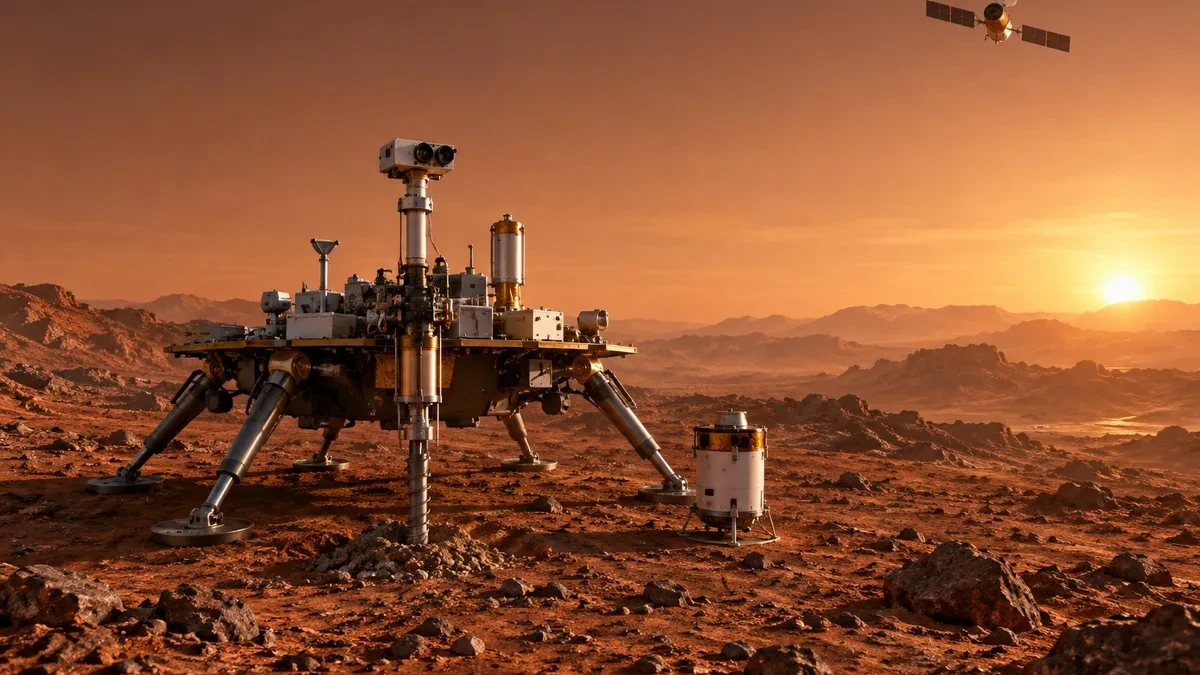
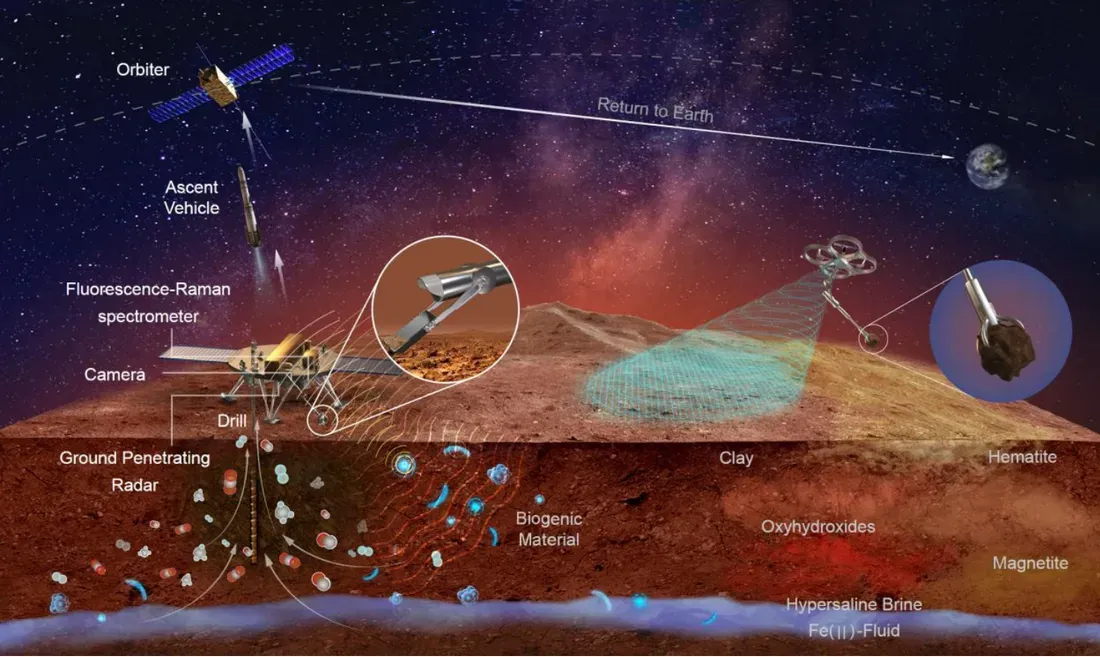
Unlike typical single-vehicle planetary missions, Tianwen-3 relies on an ambitious split architecture using two heavy-lift Long March 5 rockets. One rocket will launch the stationary lander and ascent vehicle, while the second will transport the orbiter and return module into Martian orbit. Once on the surface, the lander will employ surface collection tools and deep drilling equipment capable of reaching two meters below the ground to extract core regolith.

Retrieving subterranean soil is critical for astrobiologists hunting for potential ancient biosignatures. Unlike surface material continuously exposed to harsh solar radiation and atmospheric oxidation, buried core samples offer the best chance of preserving ancient organic molecules. Once collected, an ascent vehicle will launch the samples into Martian orbit to rendezvous with the return module - an intricate orbital docking sequence that has never been attempted around another planet.
Budget Bottlenecks and Structural Redesigns at NASA
While China moves forward into hardware prototyping, NASA continues to rework its own recovery framework. The joint NASA-ESA Mars Sample Return program hit major roadblocks after an independent review board revealed estimated development costs could reach up to $11 billion, pushing potential sample returns back to between 2035 and 2040.
In response, NASA leadership placed its original mission blueprint on pause in early 2024, inviting alternative proposals from internal labs and commercial space contractors to deliver a cheaper, faster return vehicle. While NASA's Perseverance rover has already sealed dozens of core samples inside titanium tubes across Jezero Crater, the agency lacks a locked-in hardware path to fetch them from the surface.

The Scientific Stakes of Planetary Sample Retrieval
The country that successfully lands Martian soil in terrestrial laboratories will control access to a massive scientific breakthrough. While miniature instruments onboard rovers like Curiosity and Perseverance provide invaluable remote data, mobile suites cannot replicate the precision of state-of-the-art laboratory hardware on Earth. Ground facilities can run atomic-scale imaging, mass spectrometry, and radiometric dating down to exact isotope counts.
If Tianwen-3 achieves its 2031 target, China will earn the first direct physical window into Martian planetary history. With prototype testing officially under way in China and budget debates continuing in Washington, the timeline highlights a expanding competitive dynamic in deep-space exploration.