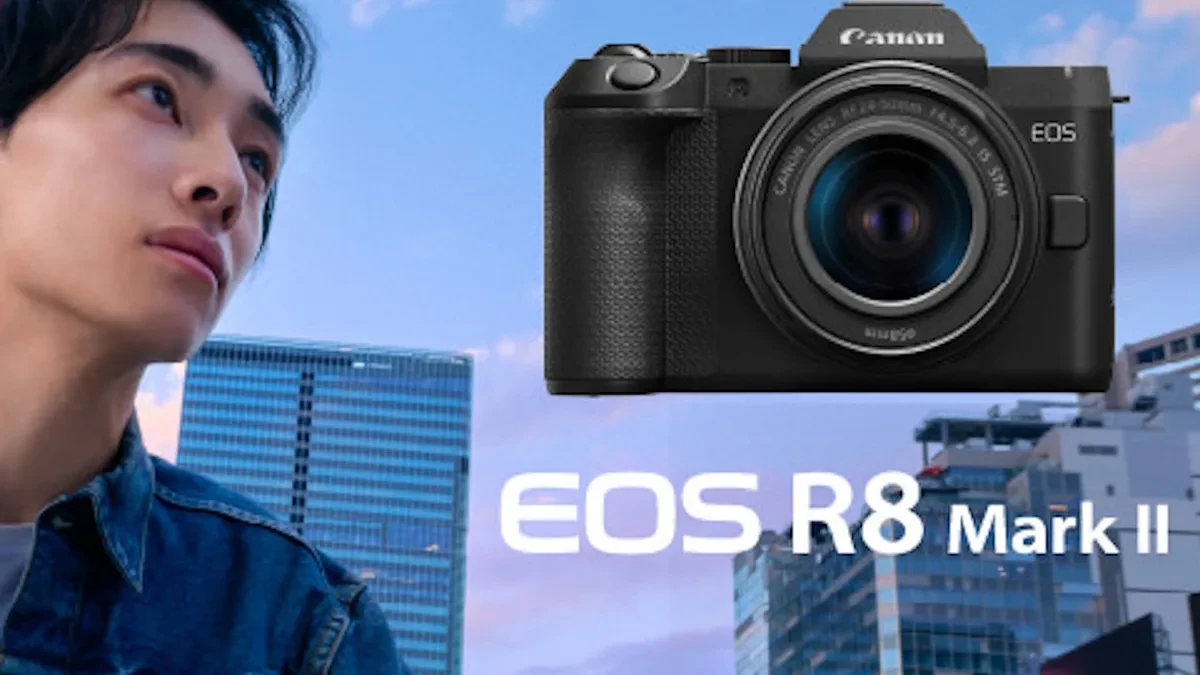
Canon has officially refreshed its compact full-frame lineup with the announcement of the EOS R8 Mark II. Starting at $1,899 for the body only and $2,099 paired with the RF 24-50mm kit lens, this updated mirrorless camera directly addresses the primary critique of its predecessor by integrating a 5-axis in-body image stabilization (IBIS) system straight into a remarkably lightweight 546-gram frame.
Engineered for solo video creators, travel shooters, and action photographers who want full-frame background blur without carrying heavy gear, the EOS R8 Mark II pairs a 24.2-megapixel full-frame sensor with 40 fps continuous shooting and 10-bit 4K60p video capture. Pre-orders are open immediately, with official retail shipping scheduled to begin on October 20, 2026.
Sensor-Shift Stabilization and AI Autofocus
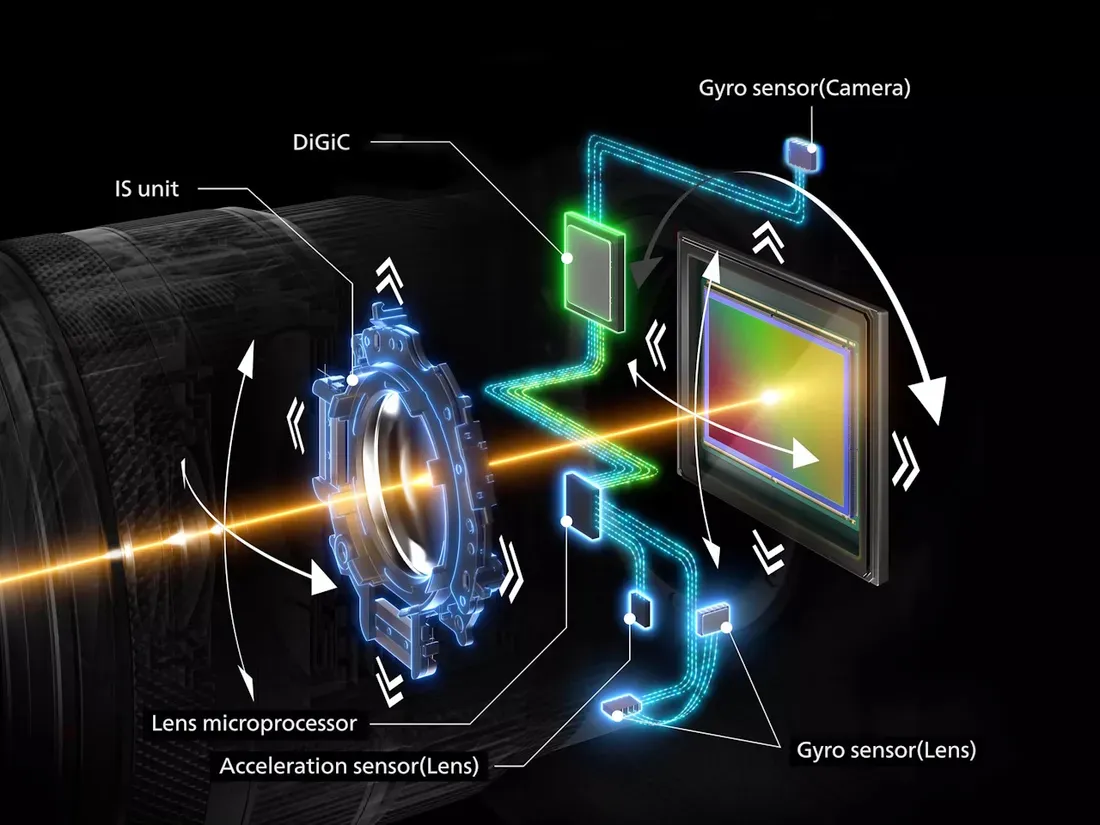
The headline hardware addition in the EOS R8 Mark II is its sensor-shift image stabilization mechanism, capable of delivering up to 7.5 stops of shake correction. For handheld videographers and low-light photographers, this enables significantly longer handheld exposures without reliance on stabilized lenses or bulky mechanical gimbals.
Working alongside the IBIS system is Canon's Dual Pixel CMOS AF II autofocus technology, covering 100 percent of the frame with 1,053 AF zones. The camera utilizes deep-learning algorithms for subject recognition, reliably tracking humans, animals, and vehicles down to low-light conditions of EV -7.5. portrait and event shooters can also pre-register up to ten specific faces in the camera memory to prioritize focus on designated subjects during busy events.
40 fps Burst Capture and Oversampled 4K60p Video
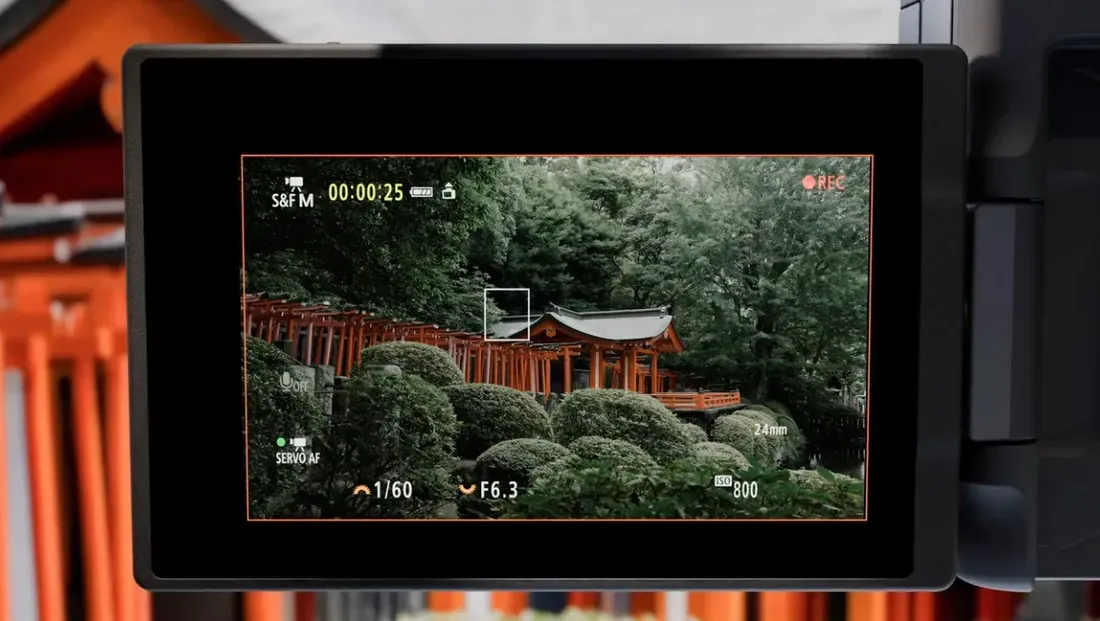
Action handling receives a major bump through the electronic shutter, which operates at speeds up to 1/16,000 second and achieves continuous burst speeds of up to 40 fps for up to 190 JPEG or 73 RAW files in a single sequence. Canon has also added a pre-capture mode that continuously buffers the last 20 frames before the shutter button is fully pressed, preventing missed split-second moments.
For video production, the camera records uncropped 4K footage oversampled from the 24.2 MP sensor at up to 60 frames per second. Videographers can capture 10-bit 4:2:2 H.265/HEVC video using Canon Log 3 to preserve up to 14 stops of dynamic range for post-production color grading. Slow-motion recording is available in Full HD at 180 fps, while physical monitoring and audio inputs are handled through micro HDMI and 3.5mm stereo ports.
Modern Connectivity and Compact Ergonomics
Despite housing an internal sensor stabilization unit, the EOS R8 Mark II maintains a compact profile measuring 131.4 x 90.0 x 79.7 mm and weighing 546 grams with the battery and card loaded. Shots can be framed using the 0.39-inch 2.36-million-dot OLED electronic viewfinder or the 3-inch 1.62-million-dot vari-angle LCD touchscreen.
Wireless workflows are updated with support for Wi-Fi 6 (802.11ax) and Bluetooth 5.3, enabling fast image transfers, remote camera control, and direct live streaming. While high-volume commercial shooters may note the reliance on a single SD card slot, the EOS R8 Mark II delivers a well-rounded set of hybrid capabilities in a compact package.