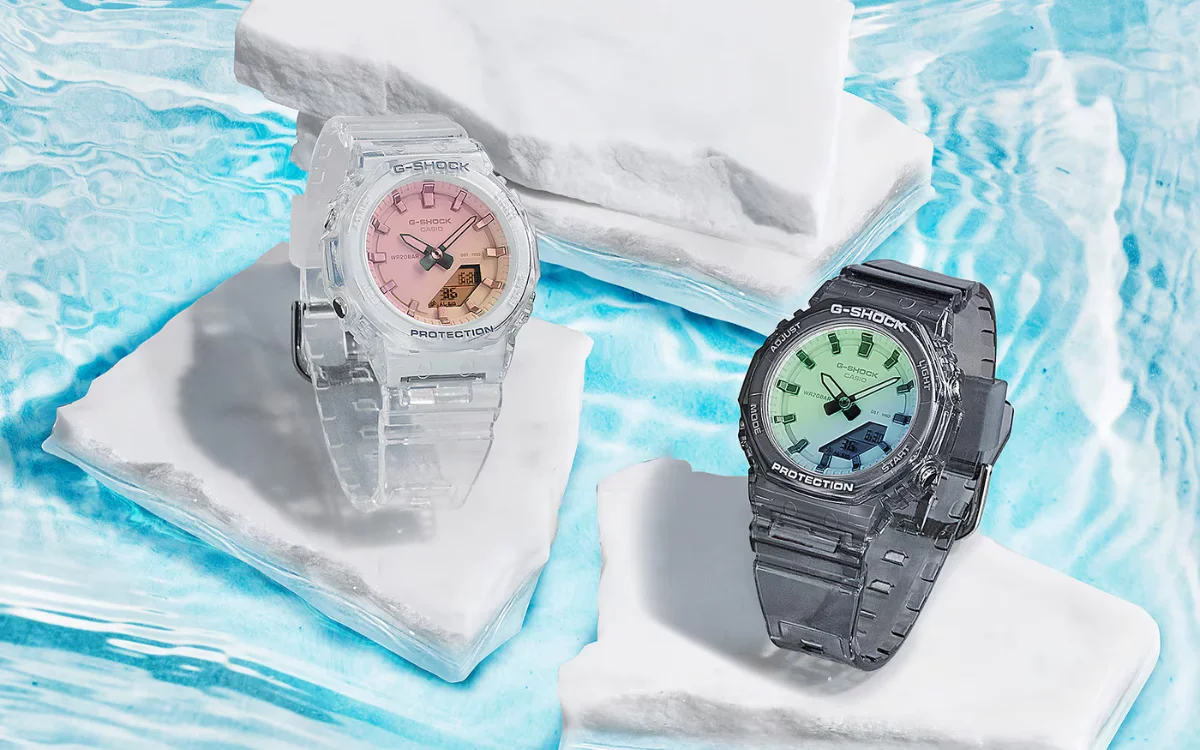
Casio’s new G-Shock watches attempt to cater to smaller wrists with a twist: polarized glass that changes color depending on your wrist angle. It sounds like a fresh take on the classic CasiOak-inspired design, but the catch is simple—this effect can make reading the dial tricky under certain lighting.
- Four hybrid analog-digital models with CasiOak octagonal styling
- Polarized vapor deposition glass creates shifting color gradients
- Two price tiers: $135 resin models and $210 stainless steel bezel versions
- Standard G-Shock features intact, with a three-year CR1025 battery claim
Polarized glass shifts colors depending on wrist angle, affecting dial visibility.
Polarized Glass: Style Over Substance?
Casio’s polarized vapor deposition process delivers a colorful gradient on the mineral glass face. On paper, this is a neat visual effect that sets these models apart. What this actually means is the dial can become a headache to read, especially if you rely on quick glances or are outdoors in uneven light. Casio openly admits this trade-off, which is rare but appreciated. If you want your watch to just tell time without fuss, this might not be your best bet.
Lightweight resin models weigh just 40 grams with a casual translucent look.
Smaller Wrists, Different Budgets
The lineup splits into two camps: the lighter, fully translucent resin models priced at $135, and the slightly heavier stainless steel bezel versions at $210. The resin models weigh 40 grams—noticeably light for a G-Shock—while the metal bezel adds about 16 grams, bringing it up to 56 grams. The metal models also feature bio-based resin bands, a nod to sustainability, though the impact here is more marketing than a game changer.
Metal bezel adds weight and a more traditional appearance at a higher price point.
Typical G-Shock Features, No Surprises
Aside from glass and size, these watches perform like standard G-Shocks: 200 meters water resistance, shock resistance, world time for 31 zones, stopwatch, countdown timer, daily alarms, and an LED backlight. The CR1025 battery promises three years of life, but real-world usage—especially if you keep the backlight on or use multiple alarms—will likely drain it faster.
The Big Picture
Casio’s new G-Shock mini watches are a mixed bag. The polarized glass is a bold design choice that prioritizes looks over legibility. Small wrists and lighter builds are welcome, but the price jump from resin to metal bezel models feels steep for what you get. This release feels more like an experiment than a clear-cut upgrade, reminding us that innovation in watches still battles the practical demands of everyday use. If you can live with occasional dial readability issues and want a compact G-Shock with a visual flair, these models might fit. Otherwise, stick to the classics that just work without fuss.
(Via)