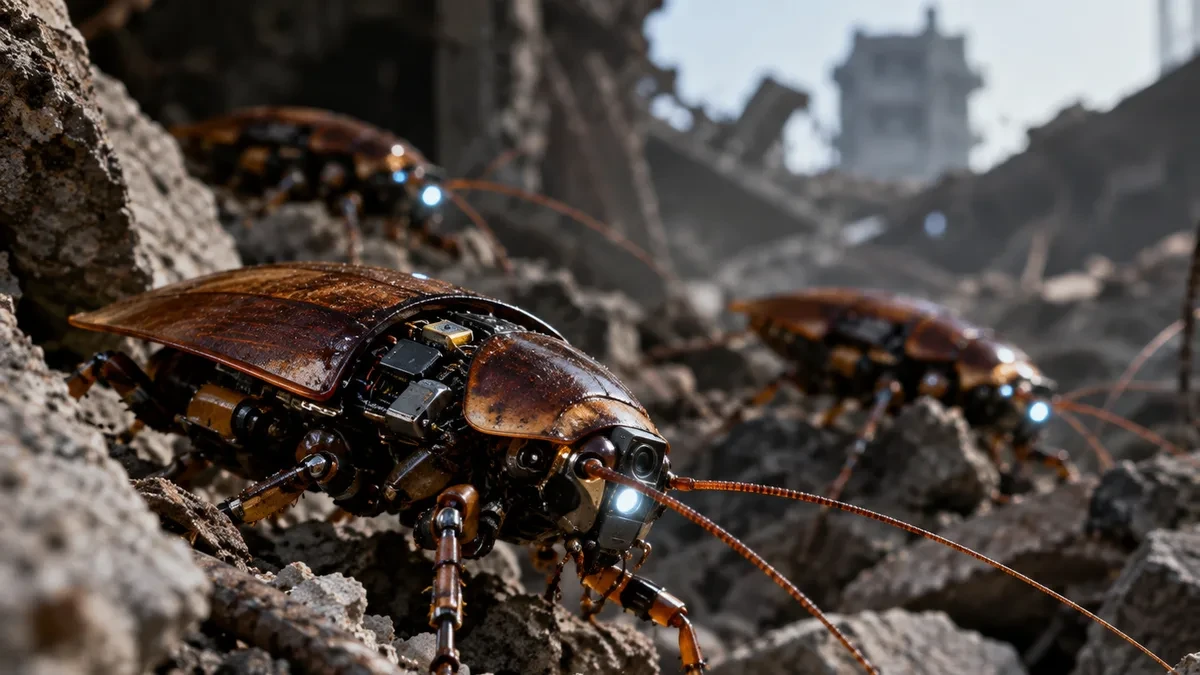
When structural collapses occur during earthquakes or industrial accidents, search-and-rescue teams face an agonizing race against time. Traditional robotics often struggle to navigate dense, unpredictable debris, stymied by narrow gaps that block even small quadcopters and ground rovers. Researchers at the University of Queensland (UQ) and the University of New South Wales (UNSW) are addressing this physical barrier by turning living insects into steerable rescue units, known as 'paraborgs.'
Building on years of bio-robotic research, the team has pushed cyborg insects beyond simple reconnaissance. Rather than merely streaming video of survivors trapped beneath heavy concrete, these modified giant burrowing cockroaches carry functional medical hardware designed to deliver emergency injections directly to casualties before heavy rescue machinery can clear a path.
Converting Living Organisms into Micro-Rescuers
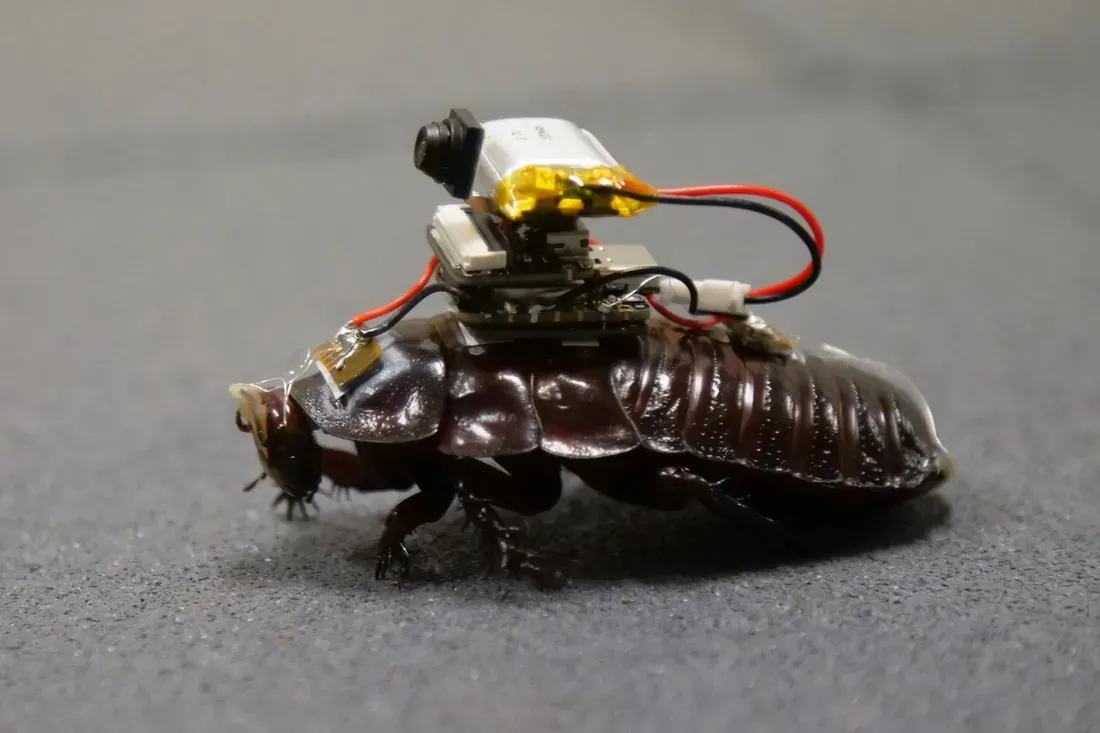
To carry functional payloads without crippling the host, the Australian research team turned to the North Queensland giant burrowing cockroach (Macropanesthia rhinoceros). Tipping the scales at up to 35 grams and measuring approximately 8 centimeters in length, it is recognized as the heaviest cockroach species on the planet. Its robust exoskeleton provides the physical payload capacity required to haul electronic control modules and miniaturized medical gear.
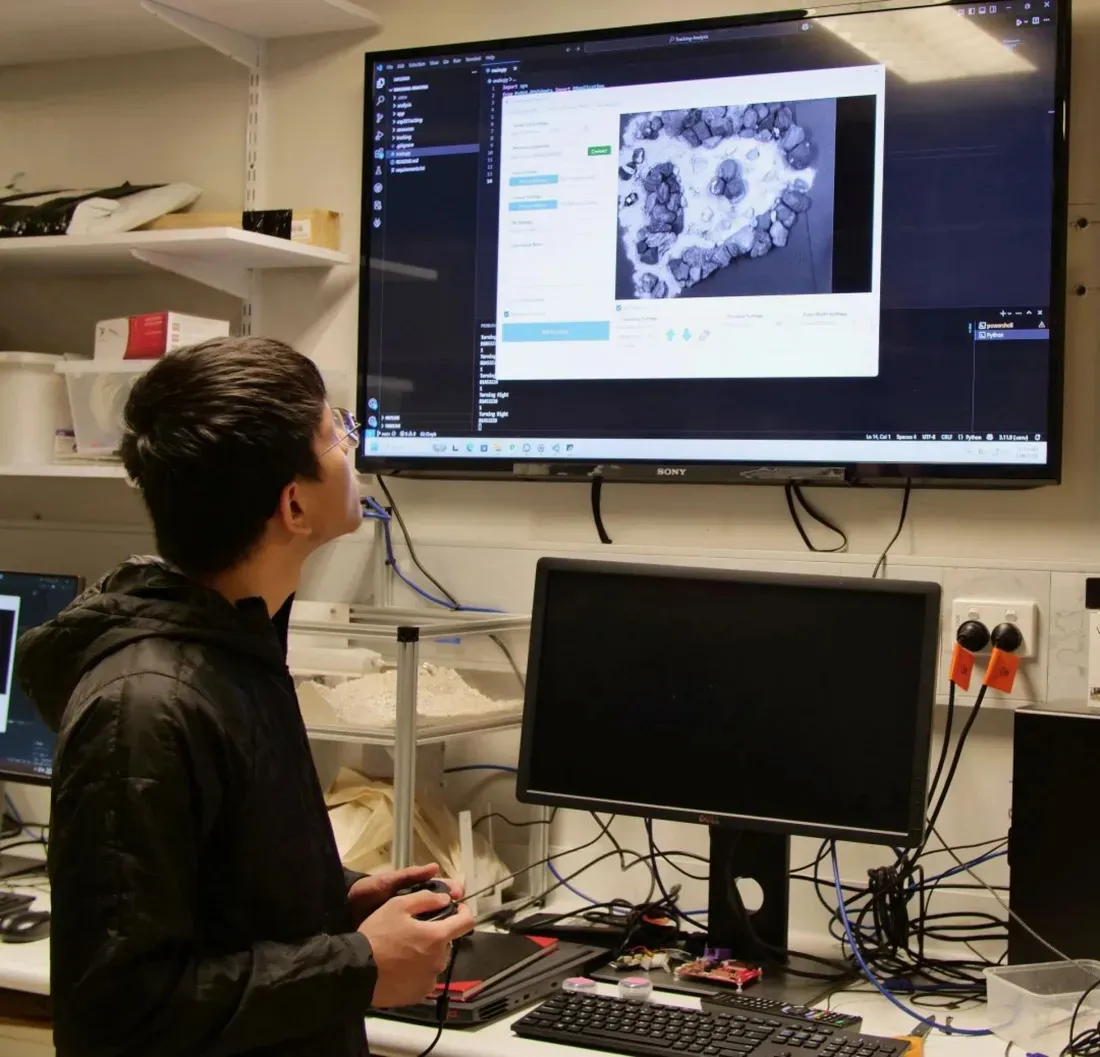
Each paraborg unit features a lightweight electronic harness mounted to the insect's back. Operators guide the bio-hybrid system by sending minute electrical impulses to nodes positioned near the antennae, prompting the cockroach to alter its heading on command.

The tactical strategy relies on paired operations. A single mission deploys two specialized insects working in tandem. The first insect serves as an observer, outfitted with a micro-camera array to feed real-time visual data back to human operators. The second insect acts as the medic, equipped with a custom spring-loaded auto-injector capable of firing a medication-filled needle when positioned alongside an injured person.
Lab Accuracy versus Real-World Deployment Hurdles
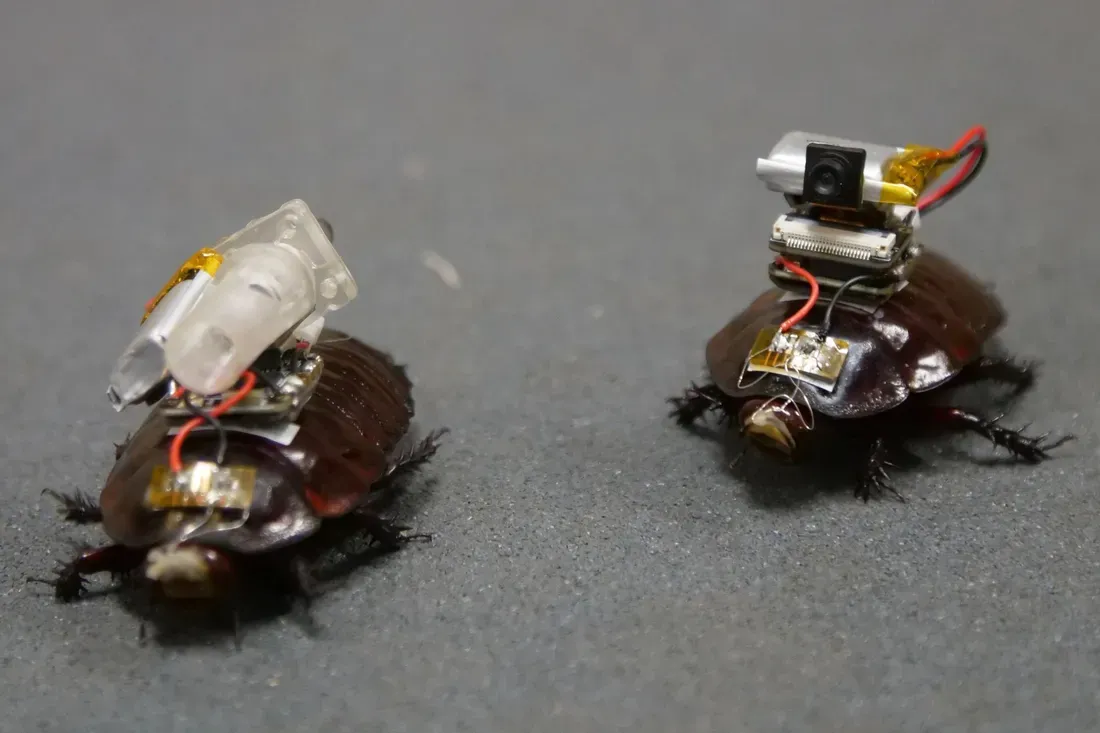
In initial laboratory evaluations, the bio-robotic platform demonstrated notable mechanical precision. When guided to within 15 centimeters of a target, the miniature auto-injector achieved a 95 percent success rate in penetrating the intended target area. The mechanical trigger mechanism itself operated reliably in approximately 90 percent of test attempts.
However, full mission execution highlights the complexity of semi-autonomous biological control. When measuring the entire sequence: navigating through obstacles, locating the target area, and successfully firing the injection, the overall success rate dropped to 72 percent.
Crucially, these performance figures were gathered entirely under laboratory conditions using silicone target models and porcine tissue samples. Real-world disaster zones present chaotic variables, including shifting rubble, micro-dust, humidity, and unpredictable human positioning, that the system has yet to encounter in field trials. Researchers acknowledge that field deployment remains years away while testing continues.
Ethical Considerations and the Public Acceptance Barrier
The bio-hybrid approach naturally raises ethical and psychological questions. The research team emphasizes that insects undergo brief anesthesia during the fitting of the micro-harnesses and continue to live normal lifespans following testing. Unlike purely mechanical robots that demand heavy batteries and complex gearboxes, biological hosts provide self-powered locomotion with high energy efficiency.
The vision for the project involves coordinating autonomous swarms of specialized paraborgs. In this multi-unit approach, dedicated sub-groups would divide responsibilities across environmental sensing, structural mapping, and medical intervention.
Despite the biological advantages, public perception remains a distinct hurdle. The image of a giant insect approaching a trapped survivor to administer an automated needle requires significant psychological adjustment. Global pricing and commercial availability have not yet been announced as the technology remains firmly in the research phase, but for search-and-rescue teams, balancing utility against victim trauma will be just as critical as refining the micro-electronics.